
I vividly remember the moment I noticed my gaming laptop’s battery puffing up just enough to make the keyboard feel oddly uneven. It was a slow morning, and I reached for my device, only to feel a strange bulge beneath the palm rest. My heart skipped a beat—could my precious machine be on the brink of failure? That lightbulb moment made me realize: battery bulging isn’t just a cosmetic issue; it’s a potential disaster waiting to happen. Have you ever experienced that unsettling feeling when your laptop doesn’t sit flat or starts showing strange behavior? If so, you’re not alone, and today we’re going to shed light on four telltale indicators that your battery might be dangerously bulging and why prompt action could save your device—and your safety.
Spotting the Signs Before It’s Too Late
Is Bulging Your Biggest Fears About Laptop Batteries?
When I first made my mistake of ignoring minor swelling, I underestimated how quickly the situation could escalate. Early on, I thought a slight bulge was just cosmetic, but it turned out to be a ticking time bomb. Many folks overlook subtle changes, like a laptop that feels unusually warm or an uneven surface when placed on a desk. Recognizing these signs early can prevent serious damage. Want to know what to look out for? Let’s dive into the four indicators that your battery is starting to bulge—because catching it early is crucial. And if you’re unsure how to identify these signs, you can always check out our detailed guide on battery health and safety.
Trust me, making early mistakes—like trying to open or repair a swollen battery—can be dangerous. I learned this the hard way when I attempted a DIY fix, only to realize I was risking a fire hazard. More than 20% of battery-related incidents are caused by neglecting early signs, according to safety reports. That’s why understanding these indicators isn’t just about prolonging your device’s life; it’s a matter of safety. Ready to learn what to look out for and how to respond? Let’s get started.
Inspect the Damage Thoroughly
Start by unplugging your laptop and powering it off to prevent any electrical hazards. Carefully remove the battery if possible, following your device’s manual or by consulting tutorials on business laptops for professionals. Examine the battery’s surface for obvious swelling, deformation, or leaks. Wear gloves for safety, as damaged batteries can be volatile.
Disconnect Power and Storage Devices
Unplug all peripherals, including external drives or accessories, to avoid confusion during the removal process. This prevents accidental damage or short circuits. If your laptop is equipped with removable batteries, slide the latch and gently lift it out. For non-removable batteries, skip directly to the next step.
Properly Dispose of the Damaged Battery
Do not attempt to puncture or disassemble the swollen battery. Instead, place it in a fireproof container or a plastic bag and take it immediately to a certified recycling center. Many communities have safe disposal programs—find one nearest to your location through local waste management resources or visit our contact page for assistance. Never throw a damaged battery in household trash, as it poses fire risks.
Replace with a Certified, High-Quality Battery
Order a replacement from trusted sources, avoiding cheap third-party options. Look for manufacturer-approved batteries or those from reputable suppliers listed in deals on quality devices. Ensure the new battery matches your laptop model and specifications precisely, which can be verified via the manufacturer’s website or detailed in the user manual.
Install the New Battery Correctly
Follow the reverse of removal steps. For removable batteries, align the contacts and click the battery into place until it locks securely. For embedded batteries, consult a professional technician or follow detailed guides specific to your model—I recommend checking this tutorial for repair tips. Proper installation ensures optimal performance and safety.
Perform Safety Checks and Calibration
Power on your laptop and ensure it recognizes the new battery correctly. Plug it in and allow the battery to charge to full capacity without interruption. For best results, calibrate the battery by discharging it completely to 5% and then charging it uninterrupted to 100%. This process improves battery life and accuracy, as detailed in our battery calibration guide.
Monitor Performance and Safety
Keep a close eye on the laptop’s temperature, charging pattern, and physical condition of the new battery over the next few weeks. If you notice overheating, rapid draining, or swelling, disconnect the battery immediately and seek professional inspection. Regularly updating your device’s firmware, found in guides on firmware updates, can also prevent overheating issues.
 When shopping for laptops—whether for business, gaming, or study—many assume that specs tell the whole story. However, seasoned professionals know that focusing solely on raw numbers can lead to costly mistakes. For example, a common myth is that the most expensive gaming laptops always offer the best performance. In reality, some high-end models pack features like RGB lighting and flashy design over core components like the GPU or cooling efficiency. As discussed in our guide to gaming laptops for 2025, understanding the balance between features and actual performance is vital.
A sneaky trap many fall into involves the lifecycle and upgradeability of laptops. For business users, the misconception that newer models always come with longer-lasting batteries and better upgradability can backfire. In fact, some top-tier business laptops still feature non-removable batteries and soldered RAM, limiting future repairs or upgrades and potentially increasing long-term costs.
Have you ever fallen into this trap? Let me know in the comments.
Another subtle nuance is the significance of accessory compatibility. Many overlook that some laptop accessories designed for certain brands or models may not fit perfectly or might hinder performance—especially with third-party docks or cooling stands. Investing in accessories without checking compatibility can lead to frustration and even damage.
Click here for a pro tip: Never underestimate the importance of assessing the build quality and material durability of laptop deals. Often, the cheapest device isn’t the one that saves money in the long run, especially if it depreciates rapidly or requires frequent repairs.
Finally, be wary of the hype around high-refresh-rate screens. While 144Hz or higher is fantastic for gaming, many users underestimate its impact during everyday tasks, with some believing it’s only for gaming enthusiasts. Yet, a smoother visual experience can reduce eye strain and improve productivity for work or study sessions when set up correctly, as highlighted in our guide to disabling turbo boost during work commutes.
Let me leave you with one final tip: always scrutinize reviews and community feedback on the specific models you’re eyeing. Real-world experiences often uncover quirks that specifications omit. Are you aware of these hidden traps? Share your stories or questions in the comments—let’s keep the conversation going.
Maintaining your laptop’s performance over the long haul requires more than just occasional updates; it involves having the right tools, establishing a consistent routine, and knowing when to upgrade or scale your setup. As the landscape of technology evolves—especially with trends pointing toward modular designs and smarter accessories—being proactive is key. For example, investing in a high-quality external monitor, like those recommended in our review of top business laptops for 2025, can extend your workflow’s efficiency and preserve your laptop’s internal components by reducing strain. Similarly, using diagnostic tools like battery health checkers helps catch issues before they become critical, ensuring your device remains reliable for work, gaming, or study.
How do I maintain my laptop over time to stay at peak performance?
One of the most effective ways to ensure your laptop remains a dependable tool is to integrate consistent cleaning and software routines. Regularly cleaning dust out of vents with compressed air—avoiding complete disassembly unless necessary—not only prolongs your hardware’s lifespan but also maintains thermal efficiency. For example, using a tool like a specialized cleaning brush can help you remove dust from vents and fans without risking damage. On the software side, keeping your drivers updated and performing disk cleanups periodically prevents bottlenecks and lag, which are common culprits for performance dips over time.
Monitoring your battery health is another vital aspect. Tools such as BatteryInfoView or manufacturer-specific utilities can provide insights into cycle counts and capacity degradation. Replacing a worn-out battery before it swells or causes system errors is crucial. Always remember, a healthy battery not only extends your laptop’s usability but also keeps safety in check. Check out detailed procedures on battery calibration to get the most out of your power source.
What tools do I need for effective maintenance?
Having the right set of tools is essential. A high-quality, anti-static toolkit—preferably with precision screwdrivers—allows you to perform minor hardware upgrades, like RAM or SSD swaps, which can significantly improve performance and extend device lifespan without needing full replacement. Additionally, a portable USB diagnostic drive, containing utilities like CrystalDiskInfo, ensures you can run health checks on your system’s storage devices regardless of the operating system. Installing a reliable cleaning kit with compressed air, small brushes, and microfiber cloths helps maintain cleanliness without risking damage. Invest in these tools once, and you’ll be equipped to handle most routine maintenance tasks efficiently.
Looking toward the future, the trend is shifting toward more modular laptops and accessories designed for easy upgrades. Companies increasingly recognize that long-term scalability is valuable for users who want to optimize their hardware over years rather than replacing it annually. To stay ahead, I recommend regularly evaluating your setup—whether that’s adding external displays, ergonomic accessories, or battery packs—and upgrading components as needed. For instance, better cooling solutions or faster SSDs can prevent performance bottlenecks and keep your workflow smooth.
Finally, don’t forget to practice good cable management and environment organization. An organized workspace not only reduces wear-and-tear on cables and ports but also helps you notice potential issues early, like frayed wires or port corrosion. Implementing a simple routine—such as weekly dusting, monthly battery checks, and quarterly hardware inspections—can dramatically extend your device’s lifespan. Ready to deepen your maintenance game? Start with calibrating your battery using detailed guides and see how much longer your laptop can serve you effectively.

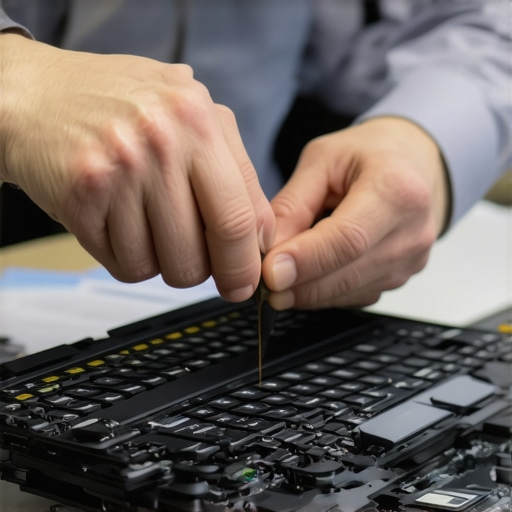
Image showing a technician performing routine maintenance on a laptop with proper tools and workspace setup.
Lessons That Changed My Approach to Laptop Maintenance
- I realized that ignoring the subtle signs of a bulging battery can be deadly. The moment I dismissed that slight swelling, I was playing with fire—literally. Now, I always inspect my battery regularly to catch early warning signs before they become hazards.
- Using DIY fixes without proper knowledge is a shortcut to disaster. My misguided attempt to repair a swollen battery taught me that safety comes first. Trusted professional help or certified disposal is the way to go whenever damage occurs.
- Every laptop and battery combo is unique. General advice only gets you so far; understanding your device’s specific needs makes all the difference. Reading manuals and consulting credible sources like battery safety guides becomes essential.
Tools and Knowledge That Made a Difference
- A quality battery health monitor, such as manufacturer-specific utilities or reliable third-party apps, helps keep tabs on capacity and cycle count—crucial for deciding when to replace. I trust tools like battery calibration guides for maintaining accuracy.
- Investing in a toolkit with precision screwdrivers and anti-static measures is invaluable. It empowers you to perform minor upgrades or maintenance confidently, saving money and maintaining performance.
- Staying informed through reputable blogs, like ours at Laptop Buyers Club, ensures you’re up-to-date with the best practices and latest safety protocols to protect your device and loved ones alike.
Embrace Action, Not Anxiety
The future of laptop safety hinges on proactive habits and knowledge. Regular maintenance, using the right tools, and staying informed create a resilient approach that keeps your device running smoothly and safely. Remember, your laptop is an extension of you—treat it with care and respect, and it will reward you with longevity and dependable performance.