
I still remember the package arriving on my doorstep like it was yesterday. It was heavy, sleek, and the box practically screamed ‘Ultra HD Excellence.’ I had spent weeks hunting for the absolute cheapest 4K panel I could find, convinced that the big-name brands were just overcharging for a fancy logo. I cleared off my desk, pushed aside my messy cables, and hooked it up to one of those game-changing gaming laptops for serious players in 2025 that I’d just treated myself to. I fired up my favorite open-world RPG, expecting to see every individual blade of grass in stunning detail. Instead, I saw ghosts. Not the spooky kind, but the blurry, trailing kind that makes your eyes throb after ten minutes. My ‘bargain’ was a 60Hz nightmare with a response time so slow it felt like I was playing through a vat of molasses. I had fallen for the classic spec sheet trap, and I’m here to make sure you don’t do the same. Today, we are going to strip back the marketing fluff and look at the gritty reality of what you actually get when you try to squeeze 8 million pixels into a budget price point. [image_placeholder_1]
The Spec Sheet Lies That Trap Most Enthusiasts
I made the mistake of thinking that resolution was the only metric that mattered for a ‘pro’ experience. It’s a common pitfall. We see that ‘4K’ sticker and assume everything else will be top-tier too. But in the world of budget displays, manufacturers often cut corners on the panel quality and the internal controller. This leads to that frustrating sensation where why your expensive gaming mouse feels laggy despite your PC being a beast. It’s not your mouse; it’s the monitor’s internal processor struggling to keep up with the data. It’s a similar frustration to the problem with using a tv as a gaming laptop monitor; the input lag is just high enough to ruin your competitive edge. According to technical data from the Video Electronics Standards Association (VESA), true high-performance 4K requires massive bandwidth that cheap scalar chips simply cannot handle without introducing significant latency. Have you ever bought a piece of tech that looked amazing on paper but felt like a total dud the moment you actually turned it on?
Is 4K actually worth the visual trade-offs on a budget?
When you go cheap on 4K, you often lose out on color accuracy and contrast. You might find yourself wondering why your laptop screen looks different next to an imac or a high-end studio display. The colors on budget 4K panels often look ‘thin’ or washed out because they use lower-quality backlighting to save on costs. I learned the hard way that a high-quality 1440p monitor will almost always provide a better gaming experience than a bottom-barrel 4K unit. We’re going to dive into the specific hardware limitations that make these budget screens so tricky to live with.
Stop Prioritizing Pixels Over Motion Clarity
If you are gaming or editing video, 60Hz is your enemy. Most budget 4K panels cap out at this frequency because driving 8 million pixels 144 times per second requires expensive hardware components. I remember setting up a budget rig for a friend using one of those unbeatable laptop deals-save big on quality devices today, only to realize the monitor made every fast movement look like a blurry watercolor painting. We eventually swapped it for one of the 3-external-monitors-that-wont-break-a-students-budget that offered 1440p at a much higher refresh rate. The difference was night and day for his productivity. If you cannot afford a high-refresh 4K panel, dropping the resolution to favor speed is a smarter move. Your eyes will thank you during fast-paced sequences where motion blur can literally cause headaches and eye strain.
Don’t Kill Your Performance With Cheap Cables
You wouldn’t put budget tires on a supercar, so don’t use a generic cable for 4K output. I once spent three hours troubleshooting a flickering screen on my primary workstation. I was convinced the GPU was dying. It turns out I was using a legacy HDMI cable I found in a junk drawer that didn’t have the bandwidth for Ultra HD. 4K requires massive data throughput. If you are using a dock for a cleaner desk, be careful; why cheap usb-c hubs might be killing-your ports is a real concern, but they also frequently bottleneck the signal to 30Hz. This makes your mouse feel like it is moving through thick mud. Always use a certified DisplayPort 1.4 or HDMI 2.1 cable to ensure the signal remains stable and crisp. 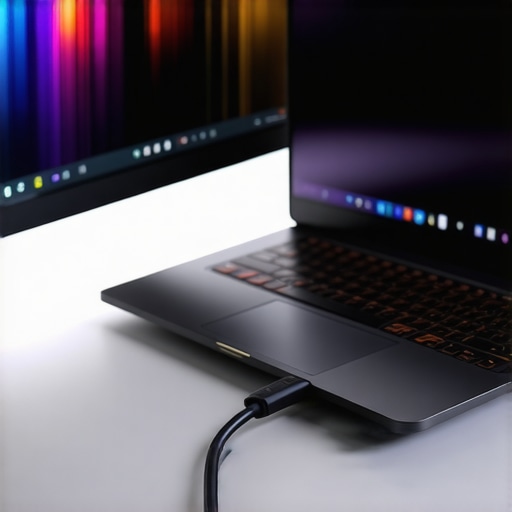
Validate the Panel Quality Before Tearing the Box
The moment you plug in that new screen, run a backlight bleed test immediately. Turn off the lights, set the screen to a pitch-black image, and look at the corners for light leakage. Budget manufacturers often have poor quality control compared to premium brands. While you are at it, check the color temperature carefully. If the image looks sickly or off-tint, you might need to learn why your laptop screen looks yellow and how to fix it. Cheap panels often use aggressive blue-light filters out of the box that ruin color accuracy for creative work. If you find yourself wondering why your laptop screen looks different next to an imac, it is usually because the budget panel lacks the sophisticated backlighting needed for true color depth.
Verify Your Hardware Can Drive the Display
Before you commit to a purchase, you must verify your source device can actually handle the load. It is vital to how to find out if your laptop can be upgraded or if its internal graphics chip supports 4K at 60Hz or higher. Many older student laptops that boost productivity and learning can technically output a 4K signal, but only at a measly 30Hz. This is fine for static spreadsheets but unbearable for scrolling through web pages or watching videos. If your laptop lacks a dedicated GPU, driving a 4K monitor might put a massive strain on the processor, leading to thermal throttling and loud fan noise.It is easy to get blinded by big numbers, but here is where I get contrarian: more pixels do not always equal more workspace. Most enthusiasts assume that jumping to 4K will give them acres of desktop real estate for multitasking on business laptops for professionals essential picks 2025. In reality, if you buy a 27-inch 4K monitor, Windows will likely suggest a scaling of 150% or 200% just so you can read the text without a magnifying glass. Suddenly, you have the same usable space as a 1080p screen, just ‘sharper.’ If your goal is actual productivity, you might be better off with a high-end 1440p panel that allows for 100% scaling natively. Have you ever fallen into this trap? Let me know in the comments.
The Sub-pixel Layout That Can Kill Your Text Clarity
The ‘Oops’ factor is something few budget reviewers talk about: sub-pixel layout. Most monitors use an RGB (Red, Green, Blue) striping. However, some budget 4K panels use a BGR layout to save on manufacturing costs. To the naked eye, it looks the same, but Windows ClearType is natively designed for RGB. On a BGR panel, text can look strangely fringed or blurry, even at high resolutions. It is one of those the truth about anti-glare vs glossy screens for office-lighting nuances that can ruin a high-end setup. According to technical analysis by experts at RTINGS, BGR layouts significantly impact text clarity scores, which is a total nightmare for students writing long papers or developers staring at code all day. 
Why does your 4K text still look blurry despite the resolution?
This is usually the result of the ‘Chroma Subsampling’ trap. If you are not using a high-quality cable or if you have connected via a cheap dock—and we already know why cheap usb-c hubs might be killing-your ports—your system might be downsampling to 4:2:2 or 4:2:0. This compresses color data to save bandwidth. While you might not notice it while watching a 4K movie, text will have ‘halos’ and look incredibly fuzzy. If you want to ensure a professional look, you must check your Nvidia or AMD control panel to ensure your output color format is set to ‘RGB’ and ‘Full’ range.
Don’t Ignore the Power Consumption of Ultra HD
Many users forget that driving 8 million pixels is not just a strain on your GPU; it is a strain on your electricity bill and your laptop’s thermal management. If you are using must-have laptop accessories to boost your work setup, like an external drive or a heavy-duty cooling pad, you might find your laptop gets significantly hotter when plugged into a 4K display. This is especially true for student laptops that boost productivity and learning which often rely on integrated graphics. The increased heat can lead to the fans spinning up to max speed, creating a distracting environment for study or deep work. Always consider if the visual upgrade is worth the noise and heat trade-off for your specific machine.If you are serious about using a budget 4K screen for more than just scrolling through social media, you need to stop guessing and start measuring. I personally use a Calibrite Display SL colorimeter because it is the only way to fix that annoying ‘greenish’ or ‘yellowish’ tint that plagues cheap IPS panels out of the box. Even on high-end business laptops for professionals essential picks 2025, the factory calibration is often surprisingly poor. According to technical documentation from the International Color Consortium (ICC), color profiles can drift over time due to the aging of the backlight LEDs. If you do any creative work, checking your levels every few months is not just a ‘pro tip’—it is mandatory to ensure your work looks the same on every device.
Buy a Colorimeter and Stop Guessing Your Colors
The biggest mistake I see is people spending hundreds on must-have laptop accessories to boost your work setup but refusing to spend $150 on a calibration tool. When I first calibrated my budget 4K panel, the difference was jarring. The ‘whites’ finally looked like paper instead of a dirty napkin. If you cannot afford the hardware yet, at least use the built-in Windows Color Calibration tool, but be warned: your eyes are easily fooled by ambient lighting. This is why I always keep a dedicated calibration profile for daytime and another for nighttime work. 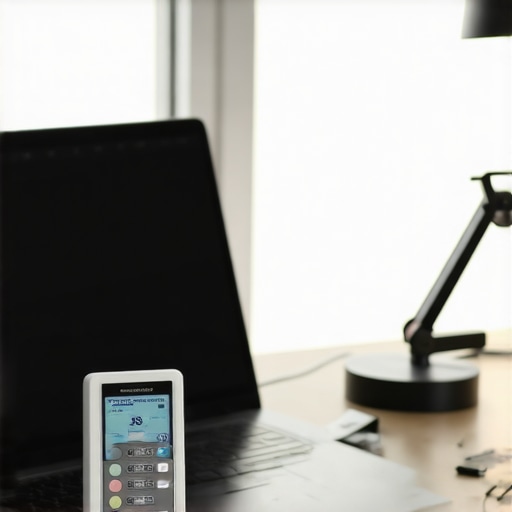
Keep Your Vents Clear and Your Ports Snug
Maintenance is where most people fail. A 4K setup generates a massive amount of heat, and if you are using game-changing gaming laptops for serious players in 2025, that heat is doubled. I have seen too many setups fail because of simple dust buildup. You should regularly learn how to clean the dust out of your laptop without opening it to prevent thermal throttling that can ruin your 4K output stability. While you are at it, don’t let debris build up in your keyboard; I’ve found that the best keyboard cleaning slime we actually tested works wonders for keeping those tiny particles away from your internal fans. Also, be mindful of your connections. I only trust the only 3 usb-c docks that dont overheat during transfers because a hot dock is a fast track to a flickering 4K signal.
AI Upscaling is the Future of 4K Longevity
Looking ahead to 2025 and beyond, the trend is moving away from native 4K and toward intelligent upscaling. Tools like DLSS, FSR, and Windows ‘Auto SR’ are becoming essential for maintaining high frame rates on high-resolution screens. In the future, I predict we will stop worrying about ‘native’ resolution entirely as AI models become indistinguishable from the real thing. This means your current budget 4K monitor might actually have a longer lifespan than you think, provided you have a GPU capable of these AI tasks.
How do I maintain my display quality over time?
To keep your screen in top shape, avoid using harsh chemicals; a simple slightly damp microfiber cloth is all you need. More importantly, manage your ‘on-time.’ If you are not at your desk, set your screen to sleep after five minutes. This preserves the life of the backlight and prevents the subtle dimming that happens over years of heavy use. Advanced Tip: Download the open-source software DisplayCAL today. It is more powerful than the software that comes with most colorimeters and will allow you to fine-tune your budget 4K panel to near-professional standards.
Hard Lessons from My 8-Million Pixel Obsession
It took me three different monitor returns to realize that the spec sheet is often a marketing fairytale. The first big lightbulb moment for me was discovering that motion clarity is far more important than pixel density. If you are using game-changing gaming laptops for serious players in 2025, you deserve a screen that can keep up with your high-speed GPU without ghosting. I also learned that budget panels frequently hide their flaws in the sub-pixel layout, which can make long nights of studying a literal headache for anyone using student laptops that boost productivity and learning. My biggest takeaway? Trust your eyes over the box art; if the text looks fringed or blurry, no amount of resolution will fix that poor manufacturing choice.
The Toolkit That Saved My Eyesight
I do not trust any monitor out of the box anymore. To get the most out of your setup, I highly recommend using the open-source software DisplayCAL alongside a hardware colorimeter; it is the only way to ensure your whites are not actually a sickly yellow or blue. I also swear by the only 3 usb-c docks that dont overheat during transfers to maintain a stable, flicker-free Ultra HD signal during long work days. To keep my workspace stable and ergonomic, I only use the only laptop stands that dont shake while you type, because a vibrating high-res screen is a fast track to motion sickness and eye fatigue. [image_placeholder_final] These tools have turned my budget setup into something that feels truly professional.
Stop Settling for Blurry Budget Visuals
You now have the roadmap to navigate the murky waters of Ultra HD marketing. Do not let a low price tag trick you into a sub-par experience that hampers your productivity or ruins your immersion. Whether you are hunting for unbeatable laptop deals-save big on quality devices today or building the ultimate creative studio, remember that visual quality is a holistic experience. Your eyes are your most important tool—treat them with the respect they deserve by choosing hardware that prioritizes clarity, color accuracy, and refresh rate over raw pixel numbers. Have you ever bought a piece of tech that looked amazing on paper but disappointed you in person? Let me know your story in the comments below!