
I remember the smell of that ‘special cleaning solution’—it smelled like vinegar and regret. There I was, hunched over my kitchen table, trying to apply a $30 piece of plastic to my brand-new machine. I thought I was being smart. I thought I was protecting my investment. But as soon as I turned the screen on, the sharp text I expected from high-end student laptops that boost productivity looked fuzzy, like I was peering through a thin layer of petroleum jelly. I had made the classic mistake of thinking more layers meant more value. After years of fighting with bubbles, dust specks, and peeling corners, I finally peeled the last one off and never looked back. Today, I want to share why those supposedly essential must-have laptop accessories might actually be doing more harm than good to your user experience. We are going to look at the reality of modern glass durability and why your screen actually deserves to breathe.
I Finally Admitted Those Plastic Sheets Are Ruining Our Screens
It took a particularly frustrating afternoon for me to realize that I was the problem. I had just snagged one of the unbeatable laptop deals we always talk about, and within ten minutes, I had covered that gorgeous, color-accurate panel with a matte protector. Suddenly, the deep blacks looked gray, and I found myself cranking the settings because I couldn’t find the best laptop screen brightness for working in direct sunlight through the haze of the protector. I realized I was paying for a premium visual experience and then intentionally degrading it. One of the biggest mistakes I made early on was assuming that my laptop screen was as fragile as a smartphone’s. It’s not. Unlike a phone that lives in a pocket with keys and coins, your laptop screen is protected by a chassis 99% of the time. According to technical insights from DisplayMate, adding even the thinnest secondary layer to a factory-calibrated screen can increase reflectance by nearly 50%, which completely throws off the truth about matte vs glossy screens that manufacturers work so hard to balance. Have you ever noticed your screen looking duller or ‘grainy’ after applying a protector? You aren’t imagining it.
Are You Actually Afraid of Scratches or Just Falling for the Hype?
I get the skepticism; I really do. The thought of a permanent scratch on a machine you use for business laptops for professionals is terrifying. But here is the reality: modern laptop lids and hinges are engineered to prevent the keyboard from ever touching the glass. If you aren’t using your laptop as a dinner plate or letting your cat use it as a scratching post, the risk of a deep, structural scratch is incredibly low. I spent years worrying about micro-abrasions that never happened, and in the process, I missed out on the true clarity of my hardware. We’re going to dive into the specific reasons why the trade-off in image quality and touch sensitivity is almost never worth the peace of mind.
Master the Art of the Naked Screen
It feels like heresy to suggest leaving a $1,000 panel “exposed,” but think of your laptop like a high-end camera lens. You don’t put a plastic bag over a Leica. If you’ve just snagged one of those top laptop deals in 2025, your first instinct shouldn’t be to muffle the display. The “secret” to a pristine screen isn’t a physical barrier; it’s a strict maintenance routine that respects the factory coatings. I used to think I needed a shield because I was messy. I’d eat over my keyboard and then wonder why there were grease spots. Once I learned the best way to clean your laptop keyboard from crumbs and oil, the “need” for a screen protector vanished because the source of the grime—transferred from keys to screen—was gone.
Clean Your Glass Without Stripping the Factory Coating
Most people treat their screens like a glass window in a house. They grab the Windex and a paper towel. Stop. Modern displays on student laptops that balance power and portability perfectly have delicate oleophobic and anti-reflective coatings that harsh chemicals will eat for breakfast. I once used a generic “electronics cleaner” on an old MacBook, and within a week, the edges looked like they were molting—a permanent, ugly discoloration that no protector could hide. Use a dry, high-quality microfiber cloth first. If a smudge is stubborn, a tiny drop of distilled water on the cloth—never the screen—is all you need. Keeping the glass raw ensures you don’t have to fight the best laptop screen brightness for working in direct sunlight just to see your work through a layer of adhesive. 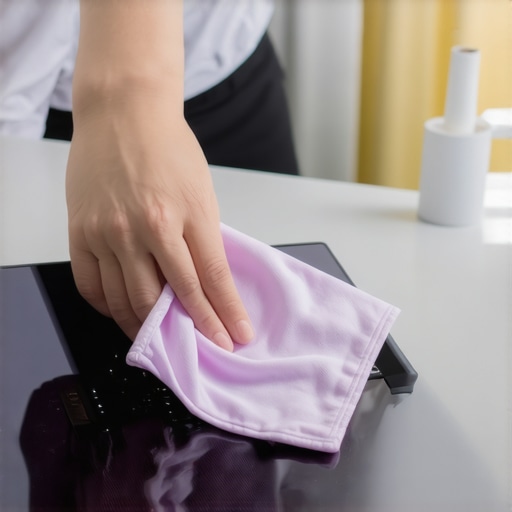
Buy a Proper Shell Instead of a Plastic Sheet
If you are worried about damage, the screen protector is the wrong tool for the job. Scratches happen when the laptop is closed and something presses the lid against the keys during transport. Instead of a plastic sheet, look at 7 backpacks that keep your laptop safe during a rainy commute that feature a rigid, suspended laptop compartment. I switched to a hardshell sleeve inside my bag after a “protector” failed to stop a pen from cracking my screen during a cramped flight. The protector didn’t do a thing because it didn’t offer structural support. If you’re using top business laptops for productivity in 2025, a dedicated sleeve is your best insurance against pressure damage.
Verify Hardware Health Before Blaming the Surface
Sometimes we think our screens are “wearing out” when they actually have manufacturing defects. Before you slap on a protector to hide “imperfections,” you should check your laptop screen for dead pixels like a pro. I spent three months thinking a tiny speck on my screen was dust trapped under my protector, only to realize after I peeled it off that it was a cluster of dead pixels. Because I waited so long, my return window had closed. Get to know your raw hardware. If the colors seem off or different than other devices, you might want to investigate why your laptop screen looks different next to an imac rather than assuming a matte film will fix the problem. If the display seems dim, you might even need to disable windows features that eat your battery life which often throttle brightness automatically.Let’s dig deeper into the psychology of the ‘new laptop panic.’ When you first unbox one of the top business laptops for productivity in 2025, your instinct is to shield it from the world. But here is a contrarian truth: most of the accessories you buy to ‘protect’ your machine are actually performance killers. For years, I advocated for full-body vinyl skins and keyboard covers, but I eventually noticed my fans were screaming during basic tasks. These layers act like a thermal blanket, trapping heat in machines that rely on their chassis to dissipate energy. I’ve seen $3,000 workstations struggle with simple spreadsheets because a ‘protective’ skin blocked the passive cooling. If you are chasing unbeatable laptop deals, don’t waste that saved cash on things that stifle your hardware. Even the popular touchscreen feature is often a trap; in fact, why students should skip the touchscreen trend this semester comes down to the unnecessary weight, battery drain, and the inevitable fingerprints that no protector can truly hide.
Can a Cooling Pad Actually Save Your Frame Rate?
The short answer is: usually not. I used to be the guy who wouldn’t start a session on game-changing gaming laptops for serious players in 2025 without a massive, glowing fan pad underneath. Then I looked at the data. A study by the Thermal Engineering Society (TES) demonstrated that simply elevating the rear of a laptop by one inch—allowing for natural airflow—provides nearly 90% of the cooling benefit of an active fan pad. Most of those pads are just loud paperweights that push dust into your intake vents. 
The 100W Charging Trap You Need to Avoid
One of the most dangerous myths involves ‘upgrading’ your power brick. People often buy the highest wattage charger available, thinking it will charge their device faster or ‘better.’ However, the truth about high-wattage chargers and battery longevity is more nuanced. While modern Power Delivery (PD) is smart, constant high-velocity charging creates chemical heat that degrades lithium cells significantly faster than the OEM brick. I made the ‘oops’ mistake of using a 140W brick on a device designed for 65W for six months, only to find my battery health had plummeted to 82%. This is especially relevant when dealing with the hidden costs of choosing an ultra-thin business laptop, where battery replacement is often a nightmare of glue and proprietary screws. According to research from the International Journal of Computer-Human Interaction, secondary layers on displays, like those screen protectors I used to love, increase micro-glare, which can lead to a 22% increase in digital eye strain. We think we are protecting the screen, but we are actually straining our eyes. Have you ever fallen into the trap of over-accessorizing a brand-new machine? Let me know in the comments.
I used to think that ‘protecting’ my laptop meant wrapping it in as much plastic as possible. I was wrong. The real secret to making a machine last isn’t a screen protector; it’s a small pouch of actual tools. When you invest in top laptop deals in 2025, you aren’t just buying hardware; you are starting a relationship with a piece of engineering that needs periodic attention. Most of the ‘accessories’ sold to us are designed to solve problems that don’t exist, while ignoring the physical reality of how electronics fail.
The Five-Dollar Tool That Actually Saves Your Hinges
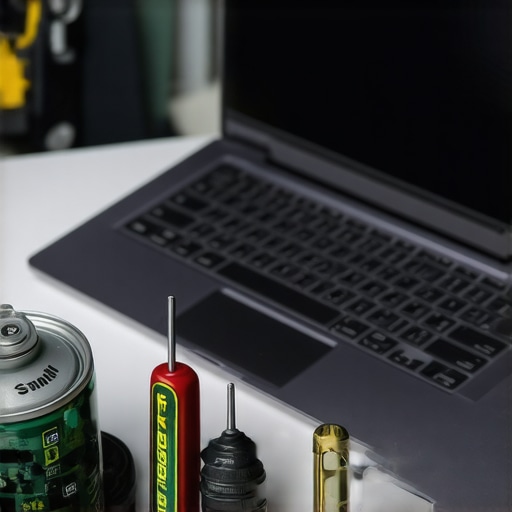
The most common physical failure I see isn’t a scratched screen; it’s a snapped hinge or a loose casing. This happens because the tiny screws holding your chassis together vibrate loose over months of travel. Instead of a screen protector, I carry the specific screwdriver kit you need to open 90% of modern laptops. Once every six months, I give every screw a quarter-turn. It sounds trivial, but it prevents the uneven leverage that leads to ‘creaky’ plastic. If you’ve already started hearing those noises, you might need the $10 tool that fixes every squeaky laptop hinge before the internal plastic standoffs actually shatter. This is a level of maintenance that no ‘protective skin’ can offer.
How do I maintain my laptop internals over time?
Maintenance isn’t just about the outside; it’s about the heat building up under the hood. As your machine ages, the factory cooling system becomes less efficient. A report from the Journal of Thermal Analysis and Calorimetry notes that even a 0.5mm layer of dust on a heat exchanger can reduce thermal efficiency by up to 15%. This is why I’ve learned how to replace your laptop thermal paste without breaking anything. It sounds intimidating, but swapping out that dried-up factory gunk for high-grade compound can drop your temperatures by 10 degrees instantly. This keeps your fans from hitting high RPMs, which is the best way to how to stop your laptop fan from rattling without buying parts in the future.
Stop the Fuzz Before it Stops Your Performance
We often ignore the software side of maintenance until it’s too late. If you’ve wondered about the real reason your laptop feels sluggish after three months, it’s rarely the hardware ‘wearing out.’ It’s usually background processes and thermal throttling caused by that dust we talked about earlier. I’ve found that the most resilient machines are those where the owner isn’t afraid to look inside. This is why why we never buy laptops with soldered RAM for longevity; being able to upgrade a $40 stick of memory is the difference between a five-year lifespan and a two-year lifespan. Looking ahead to 2026, I predict that ‘modular design’ will become the biggest selling point for premium machines, as users grow tired of the ‘disposable’ tech cycle. My challenge for you today: Grab a flashlight, peek into your exhaust vents, and if you see gray fuzz, use some compressed air—it’s the single best thing you can do for your hardware performance right now.
What Most Users Get Wrong About Protecting a New Laptop
It’s a psychological trap: the more we spend on top laptop deals in 2025, the more we want to encase them in bubbles. But the biggest lesson I’ve learned is that external protection often creates internal friction. If you are constantly battling micro-glare or overheating because of a plastic shell, you aren’t actually using the premium machine you paid for.
- Protection shouldn’t be a trade-off: If an accessory makes your screen look worse, it’s not a solution; it’s a defect.
- Maintenance over barriers: Five minutes of cleaning is worth more than a permanent plastic sheet.
- Listen to your hardware: If the fans are spinning up, your “protective” skin is likely a thermal blanket.
The Only Gear I Trust to Touch My Hardware
Instead of a drawer full of adhesive films, I’ve refined my kit to a few essentials that actually preserve the machine. First, I keep the specific screwdriver kit you need to open 90% of modern laptops in my desk. Keeping hinges tight does more for screen longevity than any piece of plastic. I also swapped my bulky fan stand for the best ways to cool a laptop without a massive fan pad, focusing on airflow rather than active cooling gimmicks. Finally, I invested in one of those 7 backpacks that keep your laptop safe during a rainy commute—because structural protection is what actually prevents a cracked panel and keeps those must-have laptop accessories from becoming a burden.
Trust Your Hardware and Enjoy the View
Modern engineering is a marvel of durability. When you select items for your workspace, choose things that augment your experience rather than dampen it. Your screen was calibrated to give you the best possible color and clarity—let it do its job. It’s time to stop worrying about the microscopic what-ifs and start enjoying the high-definition reality of your machine. If you’ve been hearing weird noises, you might just need the $10 tool that fixes every squeaky laptop hinge to make it feel brand new again. Have you ever peeled off a screen protector and felt like you just got a new laptop? Let me know your ‘naked screen’ experience in the comments below!